The volume math that doesn't work
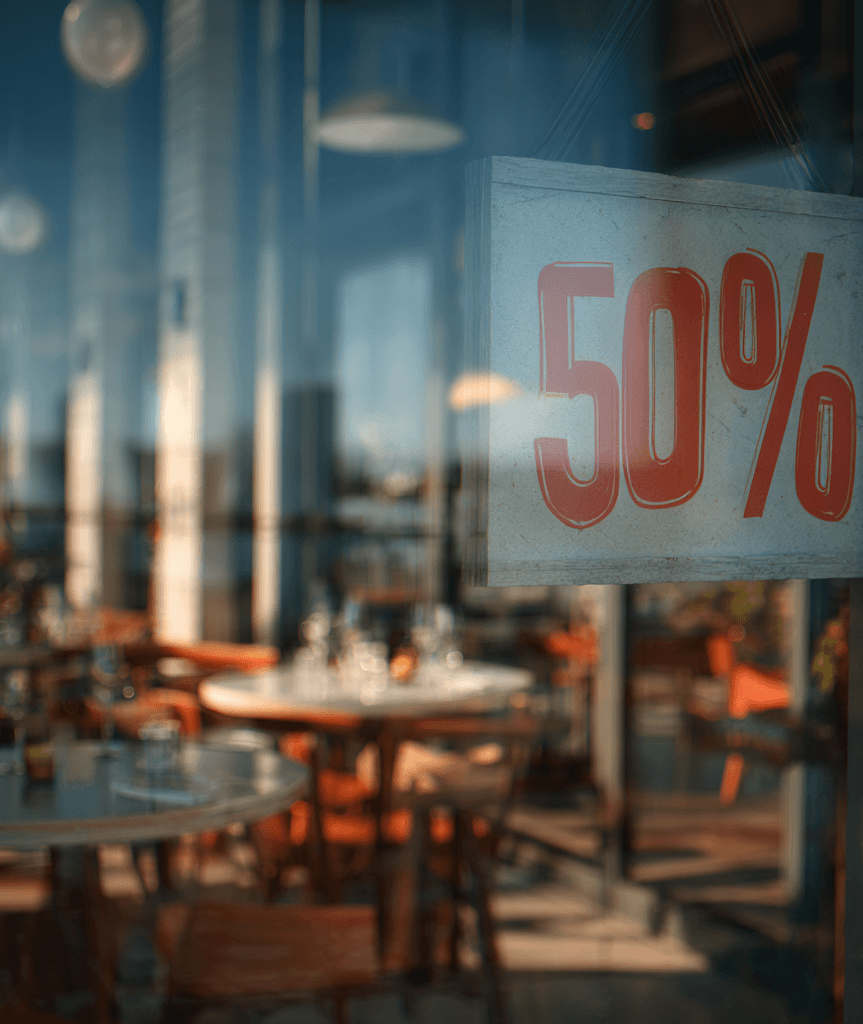
A restaurant running a 20% discount needs to increase cover count by 25% just to generate the same revenue — before accounting for the fact that higher volume also means higher variable costs. If your contribution margin is 40%, a 20% discount reduces that margin to 20% on those covers. To break even on a 20% discount night versus a full-price night, you need to serve twice as many customers.
Most promotions don't drive that level of volume increase. They drive incremental volume from price-sensitive customers who would not have come at full price — and who may never come at full price. You've now built a customer segment that only shows up for deals.
The customer behavior problem
Discounting trains customer behavior. The moment you establish a pattern of promotions — Tuesday specials, monthly deals, email discount codes — a portion of your customers will anchor to those prices as the expected norm. They will plan visits around deals and defer when there are none. Over time, regular promoters see their full-price visit frequency decline even as deal-driven visits hold steady.
The customer who only comes for the deal is not a loyal customer. They are a price buyer. The moment a competitor offers a better deal, they move.
Why 'buy one get one' is particularly destructive
BOGO (buy one, get one free) promotions are beloved by customers and devastating to restaurants. On a €15 dish with a 30% food cost, the food cost is €4.50. When you give one away free, you've sold one dish and given one away — meaning your effective revenue per transaction is €15, but your food cost is €9. Your food cost percentage for that transaction is 60%, not 30%. You've just made a dish at twice your target cost.
What actually builds volume without destroying margins
The operators who build strong, loyal customer bases without discounting focus on perceived value rather than reduced price. A few approaches that work:
- Fixed-price menus at shoulder hours: A set menu at €28 during early evening fills seats at lower acquisition cost without discounting the à la carte menu. The margin can be managed through menu composition.
- Loyalty programs that reward frequency, not price-sensitivity: A reward system that gives value after multiple visits at full price builds habit without training customers to seek discounts.
- Table add-ons and upsells: Train staff to recommend wine, starters, and desserts. A 10% increase in average ticket through upselling has a far better margin profile than a 10% discount.
- Events that drive incremental traffic: A winemaker dinner, a themed night, a cooking class — these bring in customers at full price or above, and the experience-driven value justifies the spend.
- Referral mechanics: A 'bring a new customer and get a free dessert' mechanic is customer acquisition, not discounting. The cost is controlled and the new customer enters at full price.
Promotions are not inherently wrong. Strategic, time-limited, margin-aware promotions can drive genuine business value. What destroys margins is the reflexive, habitual use of discounting as the default response to any slow period — without ever calculating what it actually costs.