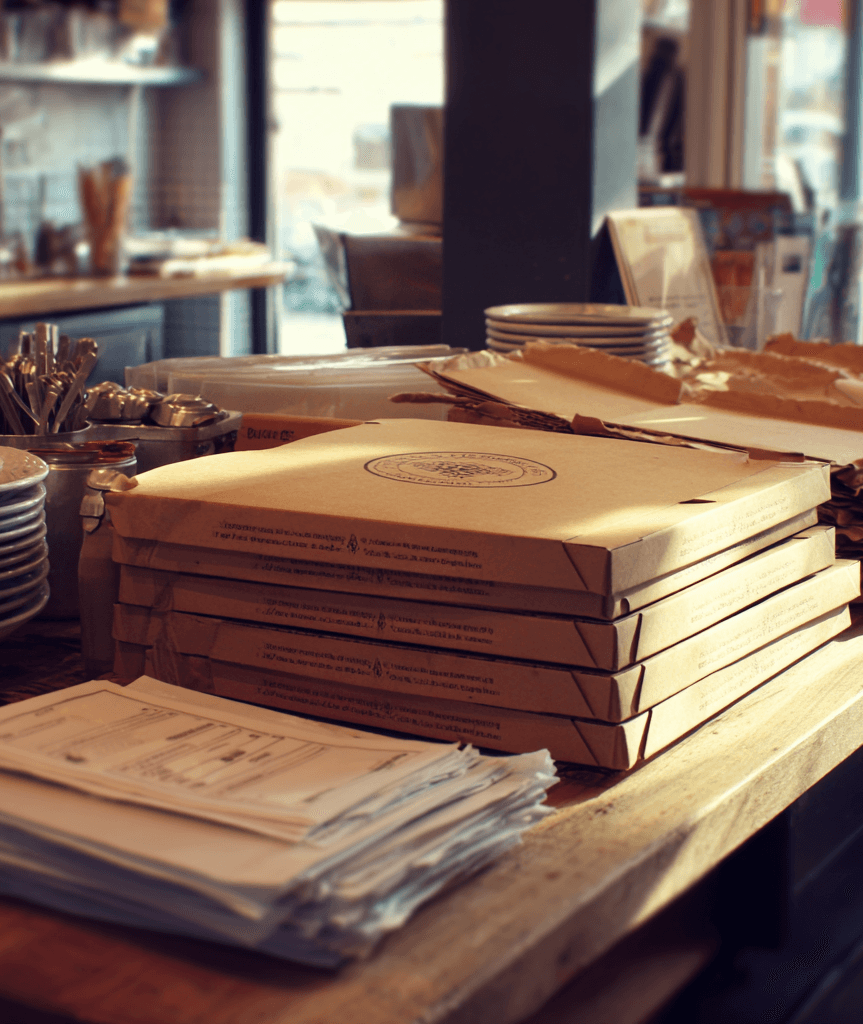
The platform commission problem
Delivery platforms typically charge between 15% and 30% of the order value as commission. On a €20 order, that's €3 to €6 going directly to the platform before you've spent a single euro on food, labor, or packaging. For most restaurants, this single cost eats the majority of the margin available on a delivery order.
Compare this to a dine-in customer. Yes, there are higher labor costs for front-of-house service. But there is no 25% skim off the top before you start counting. The average contribution margin on a dine-in cover is typically two to three times higher than on a delivery order — even when the ticket size is identical.
Platform commission is not a marketing cost. It is a structural margin reduction on every single transaction. Most restaurant P&Ls don't model it this way — and that's why delivery looks better on paper than it is in reality.
The hidden costs that don't show up in the headline numbers
Platform fees are just the start. Running a delivery operation adds a layer of costs that are easy to miss because they often don't appear as separate line items.
- Packaging: Delivery-grade containers, bags, inserts, and stickers cost between €0.80 and €2.50 per order depending on your format. At 400 orders per month, that's up to €1,000 in packaging alone.
- Kitchen inefficiency: Delivery orders disrupt kitchen flow. They arrive in unpredictable spikes, require specific preparation steps, and occupy ticket time that could be serving dine-in customers during peak hours.
- Food quality degradation: Many dishes don't travel well. When a customer receives a disappointing order, they don't re-order — even if the restaurant experience would have been excellent. This kills repeat rate and inflates the real customer acquisition cost.
- Wage overhead: Someone has to pack and hand off delivery orders. In most kitchens, this adds labor hours that aren't fully captured in the delivery P&L.
The math on a typical delivery order
Let's model a €22 delivery order. Platform fee at 25%: €5.50. Food cost at 32%: €7.04. Packaging: €1.20. Allocated labor: €4.50. That leaves €3.76 before any allocation of fixed costs like rent, utilities, or software. If you're paying 10% of revenue in fixed overhead, that's €2.20 more — leaving €1.56 per order. Across 400 orders a month, that's €624 in total margin from a channel generating €8,800 in revenue.
Run the same numbers on a dine-in cover with a similar ticket size and — without the platform fee and with better labor efficiency — you typically generate three to four times that margin.
When delivery makes sense — and when it doesn't
Delivery is not always a bad strategy. It makes sense when it fills genuine capacity gaps — typically at non-peak hours when kitchen labor is already committed and space is sitting empty. It can also make sense as a brand-building exercise in a new area, or for a specific category of high-margin items that travel well.
What it rarely makes sense as is a primary revenue growth channel. Operators who chase delivery volume while starving dine-in investment are often accelerating a margin decline without realizing it.
Practical recommendations
- Build a separate delivery P&L that accounts for platform fees, packaging, and allocated labor — not just revenue.
- Calculate your delivery contribution margin per order. If it's below €2, reconsider the channel strategy.
- Limit delivery to off-peak hours where kitchen capacity is otherwise unused.
- Curate a delivery-specific menu of items that travel well and have above-average margins — not the full menu.
- Negotiate platform commission rates once you have volume. Platforms have more flexibility than their standard contracts suggest.
- Consider direct ordering (your own site or app) for repeat customers — no commission, higher margin, better customer relationship.